Refinish when you like the layout and door style. Reface when the boxes are sound but you want new doors. Replace when the structure or layout needs to change. That decision prevents paying for work your kitchen does not need.
Cabinet refinishing
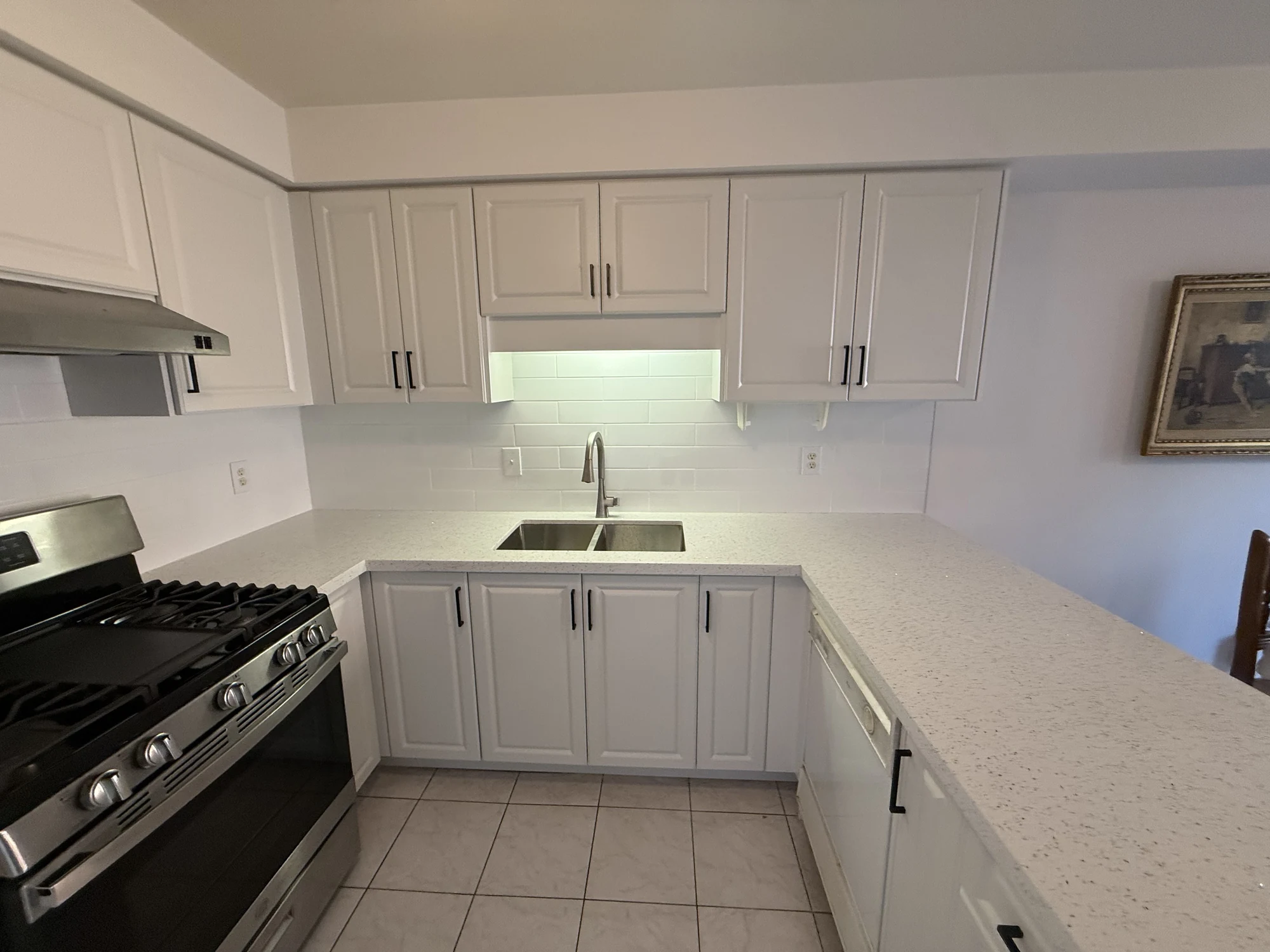
Refinishing keeps suitable existing doors, drawer fronts and cabinet boxes. The surfaces are cleaned, prepared, primed and professionally finished. It creates the least waste and usually causes the least disruption.
Choose it when the doors are in good condition and the main goal is a durable new colour or finish.
Cabinet refacing
Refacing retains suitable cabinet boxes but adds new doors and drawer fronts. Visible sides and trim are coordinated so the result looks intentional. Refacing can move a kitchen from an older raised-panel style to Shaker or slab fronts without rebuilding the room.
Choose it when the layout works but the door profile does not.
Full cabinet replacement
Replacement offers the greatest freedom. It is often the right answer when boxes are damaged, storage must be redesigned, or plumbing and appliances are moving. It also involves more demolition, material, scheduling and cost.
A practical decision checklist
- Are the cabinet boxes solid, dry and securely installed?
- Does the current layout provide useful storage and appliance clearances?
- Do you want only a colour change, or a different door profile?
- Are you planning structural, electrical or plumbing changes?
A professional assessment should explain why a particular option fits. P2D can review kitchen photos first and identify questions that need an on-site inspection.