
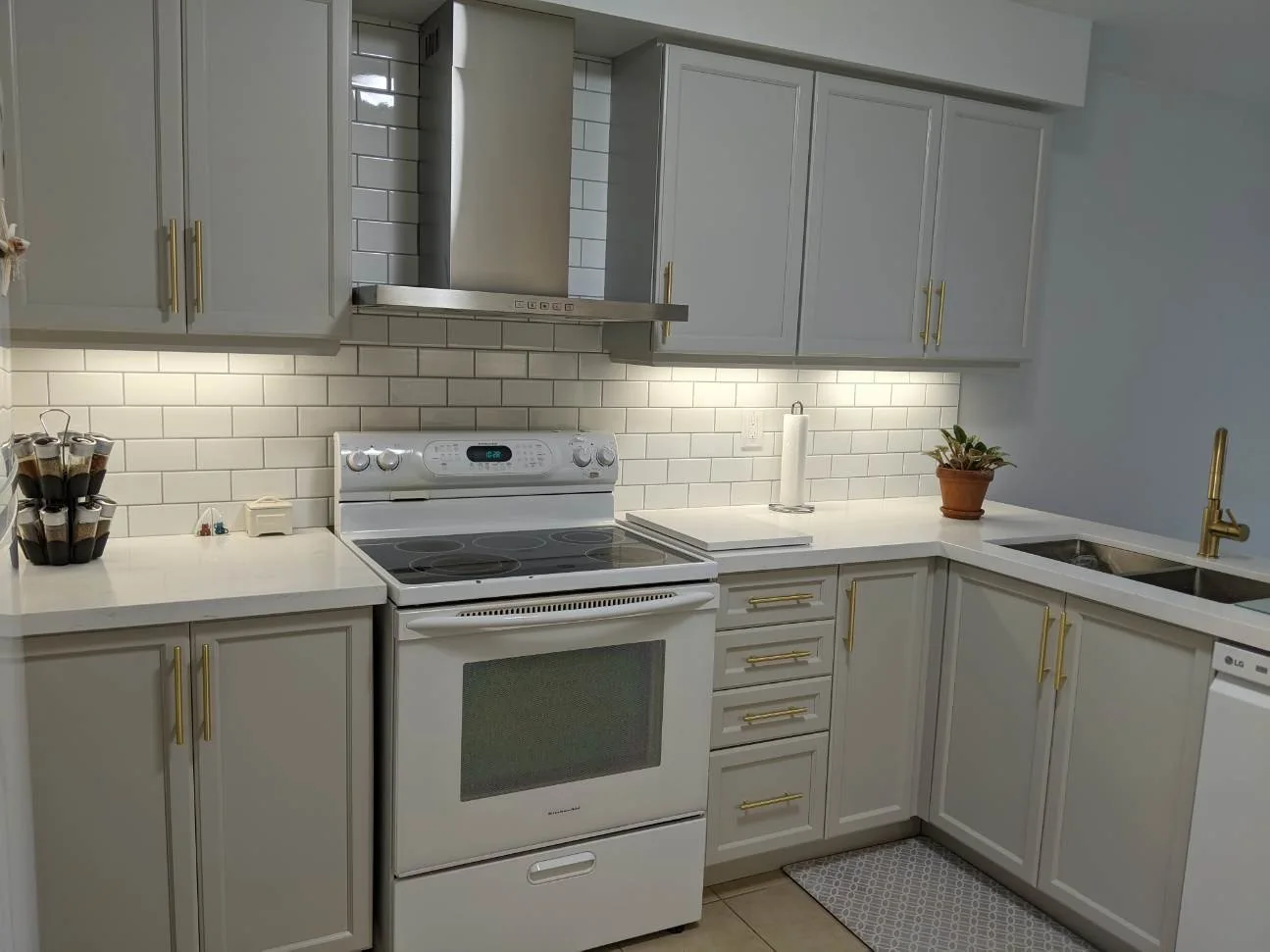
The best cabinet finish is a complete system matched to the existing surface. Product choice matters, but cleaning, sanding, primer, spray technique and curing determine whether the finish bonds and looks consistent.
Why ordinary wall paint is different
Kitchen doors receive repeated contact, cleaning, heat and moisture. Cabinet coatings must resist blocking, marking and wear. A professional spray-applied lacquer system can create a smoother surface than a brush or roller while avoiding visible lap and stipple patterns.
Preparation creates adhesion
Cooking residue can remain even when a door looks clean. Thorough degreasing comes first. The surface is then abraded and repaired before the correct primer is applied. Skipping any of these steps can allow a premium topcoat to fail.
The substrate changes the system
- Wood and MDF: may need sealing, repairs and careful sanding around profiles.
- Melamine and laminate: require inspection and a compatible bonding-primer system.
- Previous coatings: must be checked for adhesion and chemical compatibility.
Colour and sheen
Light colours can brighten a kitchen, while darker colours make door alignment and surface consistency more visible. Sheen affects both appearance and how marks show. Approve a physical sample in the room because screens and changing daylight are unreliable colour references.
Ask a refinisher which cleaning, primer, topcoat and curing process will be used for your specific doors. A clear answer is more valuable than a brand name on its own.